Trawling
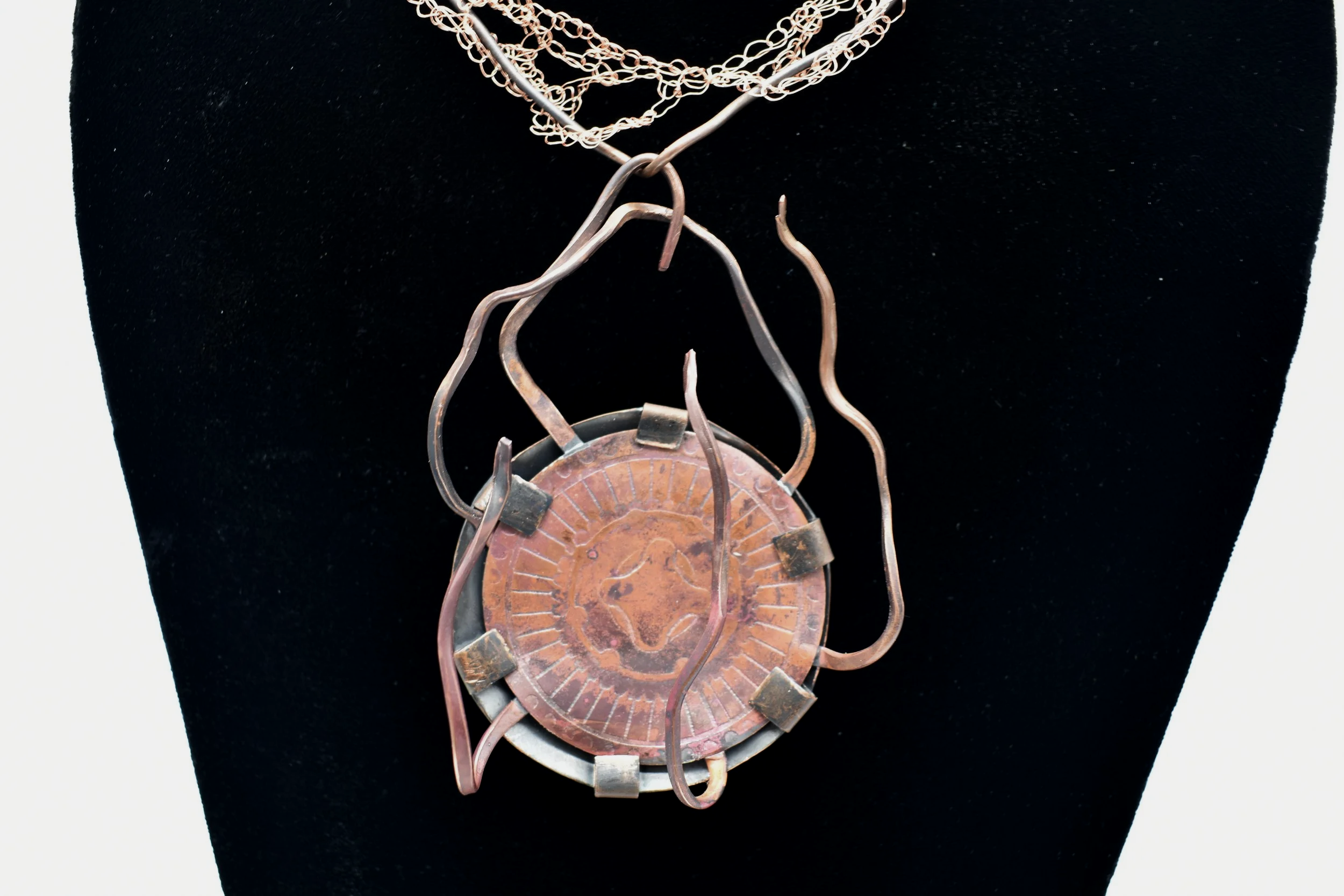
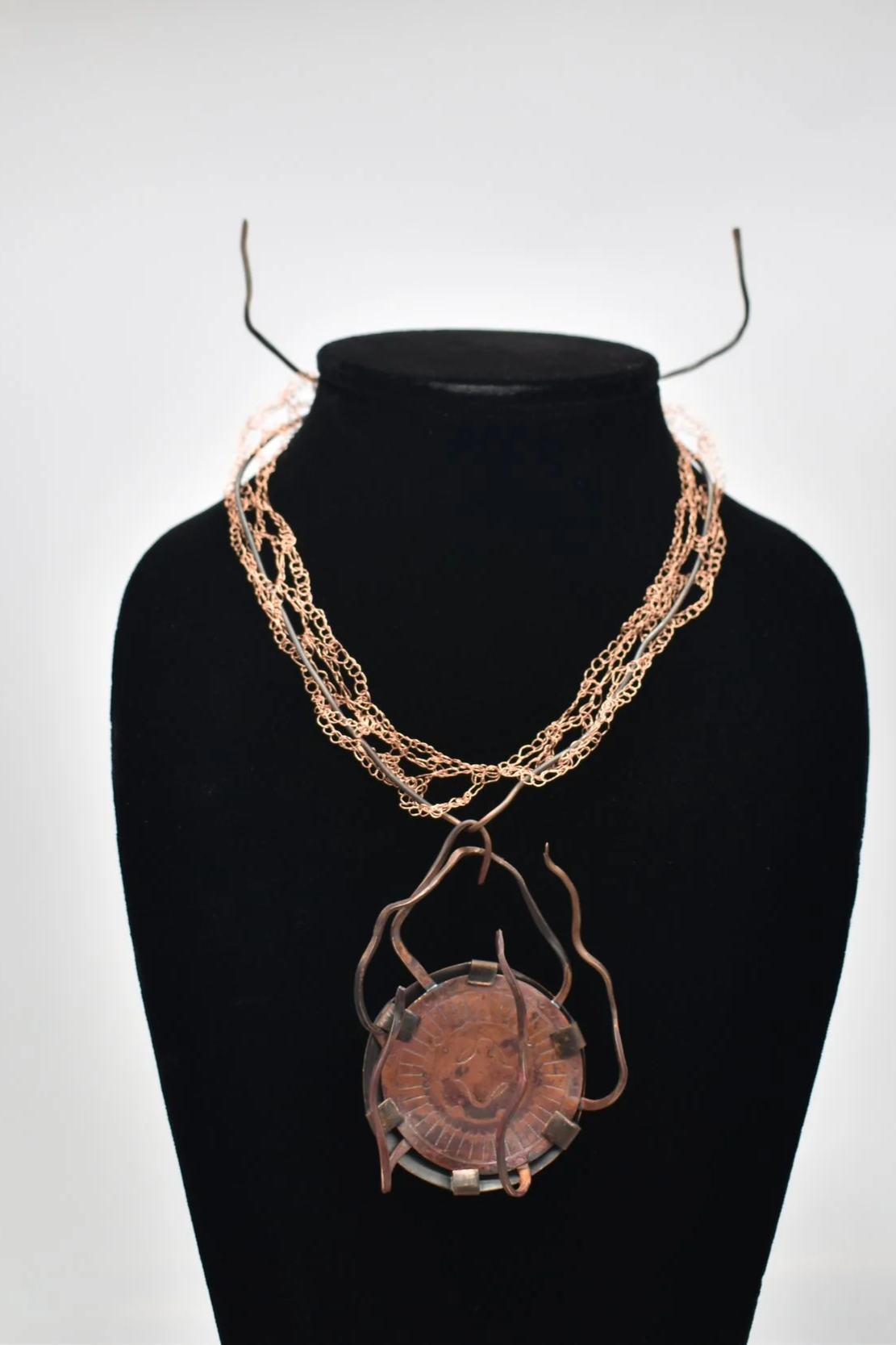
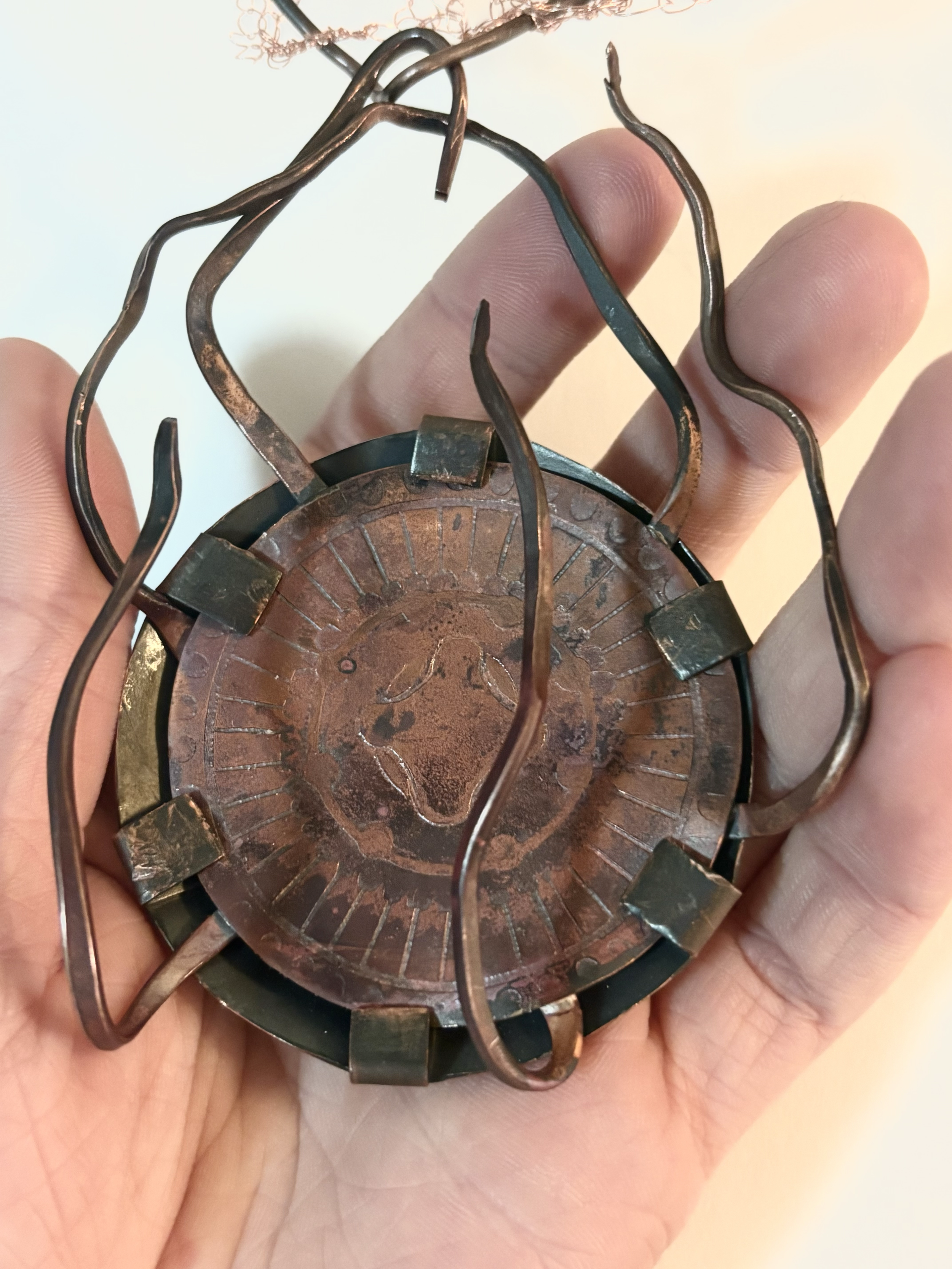
Trawling is a piece in the Capturing Atolla collection, a study on freedom and entrapment through the imagery of deep sea atolla jellyfish. The necklace displays an atolla ensnared in a net and wrapped around the wearer's neck. In this piece the wearer is a captor and the observer is complicit. The necklace displays the underside of the creature, where it is most vulnerable. Its tentacles are outstretched towards the parts of itself that are weaved into crocheted wire netting.
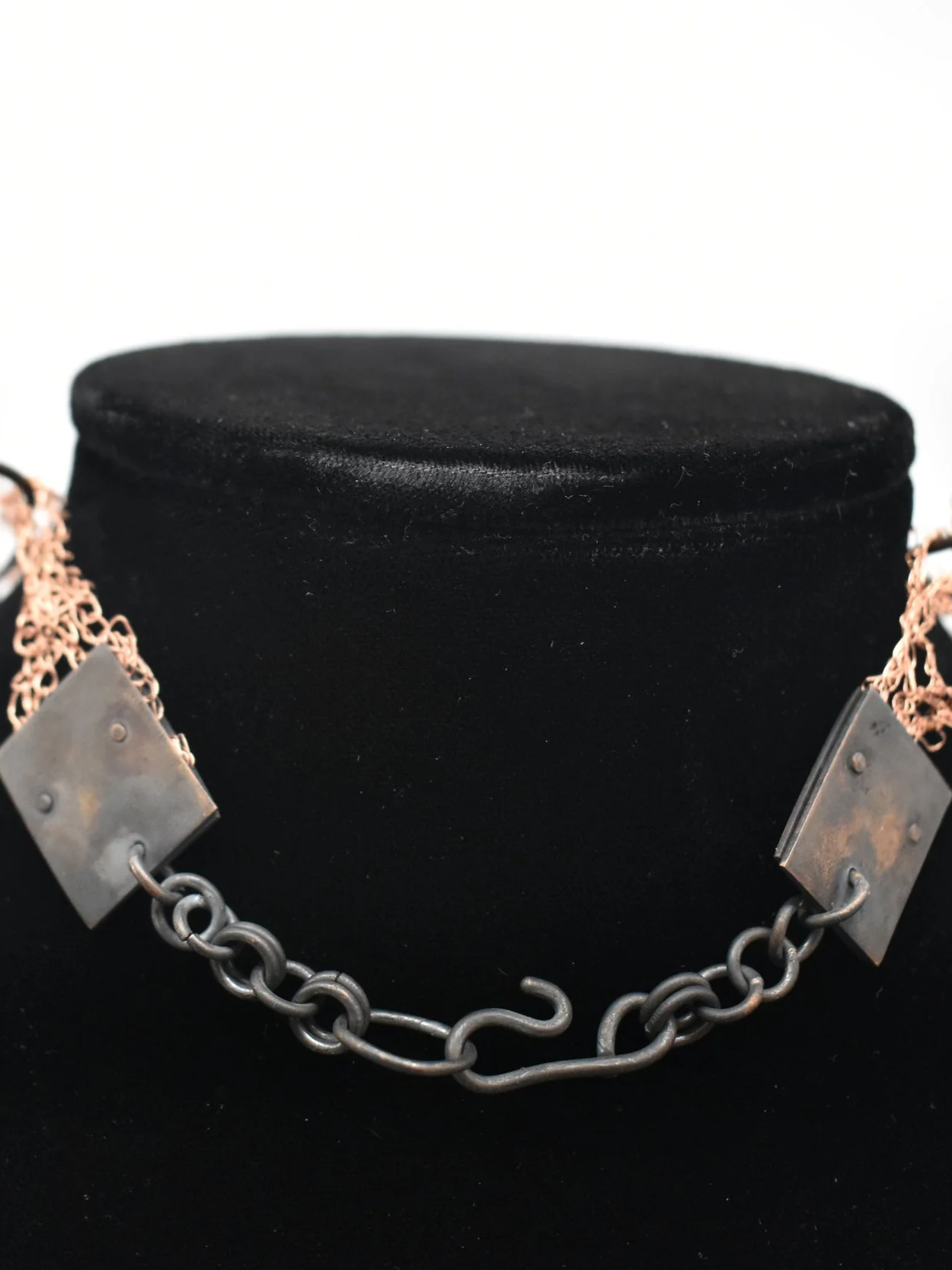
The front-plate was created through a very rigid and precise etching process, the tentacles are formed, a much more organic technique, where metal is repeatedly hit with a large mallet until the metal stretches and contorts. This contrast between standardized and those done by hand, represents the atolla losing its freedom. The primary shapes on the front plate reference the closure. Use of crochet is a through-line in the Capturing Atolla collection. crochet itself is loops caught by loops, the material losing itself to this inner structure and becomes something else.
The finishes utilized further ties into the theme of freedom and entrapment in the collection. The front-plate and tentacles are fire-patina, achieved through heating up the metal for a prolonged period of time, causing a variety of colors and patterns to form. Exact results can be manipulated, but are largely random as is the case with Trawling. The rest of the necklace—save for the wire crochet—is treated with a liver of sulfur patina. A much more standardized process with clean and even results. It is controlled.
Copper, 2026